
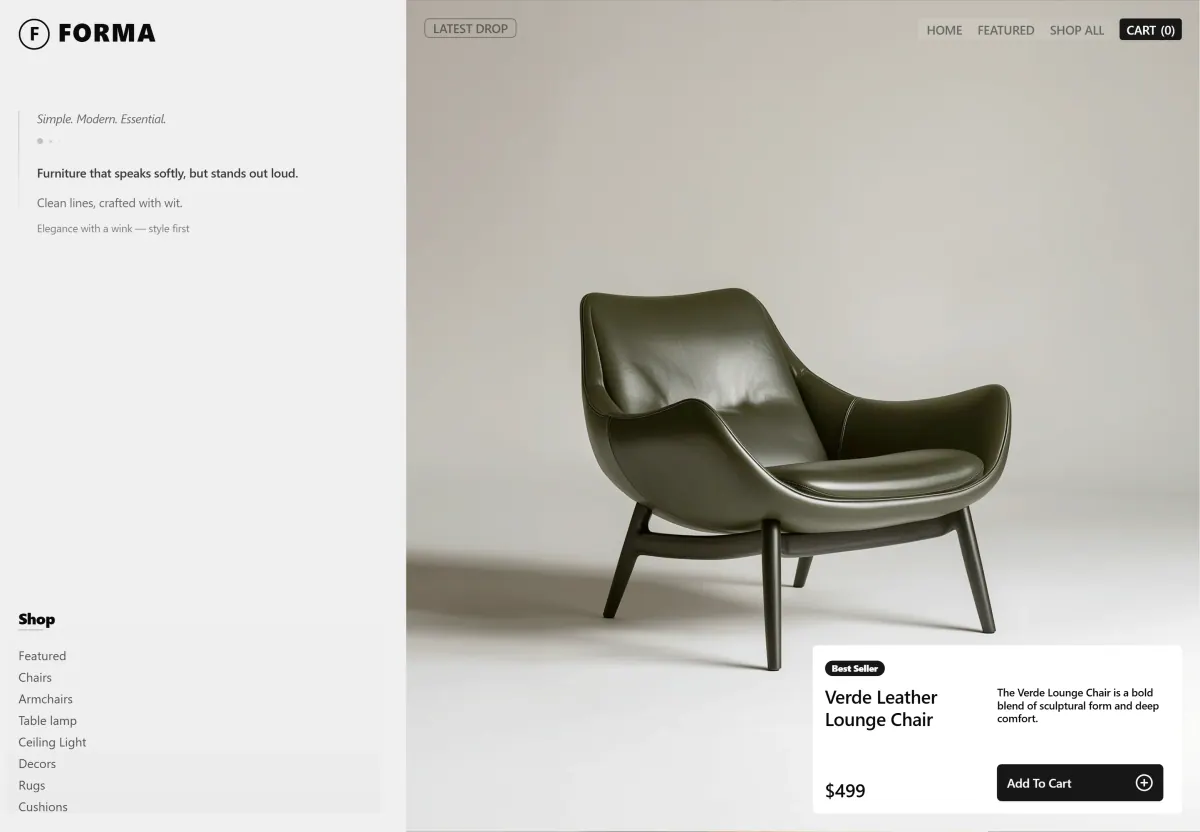
Retail shops
Retail websites that keep selling after the shop door closes
A product catalogue with stock levels, a cart, payment by QRIS, bank transfer or e-wallet, and shipping costs worked out at checkout. For shops that want orders from other cities, and owners tired of tracking WhatsApp orders by hand.

A physical shop has loyal customers, but its reach ends at passing trade and opening hours. When a regular moves to another city or wants to shop at night, all they can do is send a WhatsApp message and wait. Behind the counter, orders are written down by hand, transfer receipts are checked one by one, and the stock on the shelf rarely matches the notebook.
NextTML is a Jakarta web studio that builds online stores for retailers: fashion, homeware, electronics, beauty, hobby and hardware shops. We set up the catalogue with categories, size or colour variants and stock per variant. Shoppers pay through the payment provider you choose, and the payment status updates in your dashboard by itself. For a foreign-owned brand selling in Indonesia, this is also how you accept the methods local shoppers expect, QRIS and e-wallets included.
Your own store doesn't have to replace Shopee, Tokopedia or TikTok Shop. Marketplaces bring new buyers; your website is where returning customers, bulk orders and agent pricing live. Customer data and order history stay in your own dashboard, not on someone else's platform.
For shops that want to take payment online, we recommend our online store service on the Enterprise plan: e-commerce ready, API integrations for payments and shipping, a custom admin dashboard and 12 months of priority support. It usually takes 2–4 weeks. If for now you only need a catalogue and WhatsApp orders, the Business plan is a sensible first step.
What retail shops usually need
-
01
Shop stock and online stock drift apart
The last unit sells at the till but still shows as available online. A paid order has to be cancelled, and some of the customer's trust goes with it.
-
02
Payment checks that eat the day
Every WhatsApp order has to be matched against a transfer receipt and written up again. On busy days, an order gets missed or shipped twice.
-
03
Shipping questions on repeat
Buyers outside Jakarta often ask for the shipping cost before they commit. Working it out by hand for every enquiry takes staff time.
-
04
Different prices for different buyers
Retail customers, agents and wholesale buyers each pay a different price, and today the price lists go out one by one over WhatsApp.
-
05
Customers you can't reach again
Marketplace buyers are hard to contact about new stock or offers. Your own store keeps the customer list and purchase history in your dashboard.
What we build for retail shops
-
Catalogue with variants and stock
Categories, filters, search and product pages with photo galleries, size or colour variants and stock per variant. Sold-out items can't be bought by mistake.
-
QRIS, bank transfer and e-wallets
Payments go through the provider you choose, and the order status changes as soon as the money arrives. No more matching receipts by hand.
-
Shipping rates and in-store pick-up
Shipping is calculated at checkout through a shipping-rate service for the couriers you use. Customers nearby can collect from the shop instead.
-
Orders and stock dashboard
One dashboard for new orders, shipping status, stock, products and promo codes. Warehouse and admin staff can have their own accounts.
-
Agent and wholesale pricing
Tiered prices by quantity, or special prices for agent accounts you approve. We build it around the way your shop actually sets prices.
-
Connected to your POS and marketplaces
If your point-of-sale app offers an API, stock can be kept in step with the website. Links to your Shopee, Tokopedia or TikTok Shop stay in place for buyers who prefer them.
A typical page structure
This structure is a starting point; we adapt the pages and their order to your business.
-
/
Home
New arrivals, main categories, current promotions and your delivery promise.
-
/shop
Shop
Every product with category, price, size and colour filters, plus search.
-
/product-page
Product page
Photos, variants, stock, description, size guide and a buy button.
-
/cart-checkout
Cart & checkout
Address, courier or in-store pick-up, shipping cost and payment method.
-
/order-status
Order status
Shoppers check where their order is with an order number and email.
-
/store-location
Store location
Your physical shop's address, hours, map and WhatsApp.
-
/store-policies
Store policies
Shipping, exchanges and returns, warranty and payment methods.
The right package
Enterprise
For the needs above, the Enterprise package is usually enough. We confirm the exact scope in a written quote after the consultation.
- Up to 25 pages
- Custom features
- E-commerce ready
- API integrations (payments, analytics and more)
- Unlimited revisions for 30 days
Service
Online store
An online store with a product catalogue, shopping cart, online payments and order management in one dashboard. For brands that want a sales channel of their own, alongside Shopee or Tokopedia.
See online storeRelated work


Five steps
until your website is live.
A simple company profile site usually takes 1–2 weeks, an online store 2–4 weeks. For web applications we send a written schedule after the consultation.
-
01
Consultation
We talk about your business, what the website should do and your budget. Free, over WhatsApp or a video call.
1 day
-
02
Design
We plan the page structure and the design. You give feedback before any code is written.
3–5 days
-
03
Build
The approved design becomes a working website, with an admin panel if your plan includes one.
depends on scope
-
04
Test & launch
You try everything on a test address. Once it is right, we connect the domain, HTTPS and sitemap.
2–4 days
-
05
Care
We fix bugs and answer questions for the support period of your plan.
1–12 months
Frequently asked questions
Something else? Ask us on WhatsApp. We reply the same day during working hours.
Ask on WhatsApp-
For many shops, both. Marketplaces help you reach new buyers, while your own store gives you the customer data, your own branding and your own pricing rules, with no platform commission. Payment gateway fees still apply, and you'll need to bring visitors in yourself through social media, ads or existing customers.
-
Yes, in one of two ways. The simple way is staff updating stock in the admin dashboard. If your point-of-sale app offers an API, stock can sync automatically. We check your POS during the consultation before we promise the integration.
-
That depends on the payment provider you choose. Most support QRIS, bank transfer, credit cards and e-wallets. We handle the integration, while the account sign-up and business verification are done in your company's name. The provider sets the transaction fees, not us.
-
Usually 2–4 weeks, depending on the number of products and variants and on the payment and shipping integrations. Apply to the payment provider early, since verification can run alongside the build.
-
You can add them yourself in the dashboard, or send a spreadsheet with photos and we'll import them before launch. How tidy the data is, from names and prices to variants and weights, affects the schedule, so we check it early.
Tell us about your business.
We will help you pick the first step.
Free, no strings attached. We reply the same day.